

Imagine you are using a USDC lending app on a familiar DeFi network. The site looks normal, your wallet is connected, and the transaction appears to involve only a routine deposit. A moment later, the wallet warns that the action could transfer assets or create an approval with broader consequences than the page suggested. You pause. That pause may be the difference between a normal interaction and an expensive mistake.
This is where Rabby Wallet’s transaction simulation becomes interesting. It does not merely ask, “Do you want to sign?” It attempts to show what a proposed blockchain action is likely to do before the action is broadcast. That changes the wallet from a passive signing window into a decision aid. But the distinction matters: simulation is an important layer of defense, not a guarantee that a DeFi transaction is safe.
The practical problem: a transaction is not the same thing as its label
Blockchains record instructions, not human intentions. A decentralized application may describe an action as “swap,” “stake,” or “deposit,” while the underlying transaction calls a smart contract with specific permissions and parameters. The wallet ultimately receives encoded data. Most users cannot read that data directly, and even technically experienced users may not want to reconstruct every contract interaction by hand.
That gap creates a recurring security problem. A malicious website does not necessarily need to steal a private key. It may persuade a user to sign a transaction that grants a token allowance, transfers an asset, changes a position, or authorizes a contract to act later. In other cases, the danger is less dramatic but still costly: a wrong network, an unexpected recipient, an unfavorable route, or a transaction that fails while consuming a network fee.
Transaction simulation addresses this gap by executing a representation of the proposed action in an inspection environment before it is submitted to the live chain. The wallet can then compare the expected state before and after the transaction. In plain language, it tries to answer questions such as: Which assets leave the wallet? Which assets arrive? Is a token approval being created? Does the contract call appear to fail? Will the user’s position change in an unexpected way?
That is a sharper mental model than “the wallet checks whether a website is good.” Simulation generally evaluates the proposed transaction, not the entire moral or operational quality of the application. A malicious contract can produce a technically coherent result. A transaction can simulate successfully and still interact with a protocol whose economics are poor, whose token is illiquid, or whose governance has changed the relevant rules.
A case study in three layers of risk
Consider a hypothetical user, Maya, who finds a yield opportunity through a social media post. She opens the site, connects Rabby, and sees a request to approve a stablecoin. The site calls this a one-time step needed before depositing. Rabby’s simulation indicates that the approval would give a contract permission to spend a substantial amount of the token, perhaps more than Maya intended to deposit. The warning is useful because it exposes a mismatch between the user-facing story and the blockchain-level permission.
Maya now faces three different questions, and confusing them is a common source of loss. First: What will this transaction do? Simulation can often help answer that. Second: Who controls the contract, and what could it do later? That requires contract, protocol, and governance analysis. Third: Is this opportunity economically sensible? That involves liquidity, price risk, smart contract risk, incentives, and sometimes tax considerations. A wallet can assist with the first question without settling the other two.
Approvals deserve special attention because they are not always equivalent to an immediate transfer. An approval can authorize a contract to move tokens in the future, subject to the allowance recorded by the token contract. Revoking unused approvals later may reduce exposure, but revocation is not a substitute for careful signing. Users should also distinguish a token approval from a permit-style signature or another off-chain authorization. These mechanisms may look similar in a wallet interface while creating different forms of permission.
The second layer is contract behavior. Simulation uses an assumed blockchain state and an execution path. If the real state changes before the transaction is mined, the outcome may differ. A swap can face changing liquidity or price conditions; a lending position can be affected by collateral values; a crowded transaction can encounter a different fee environment. A simulation is therefore best understood as a conditional preview: “Given this state and this call, this is the likely result,” not “This outcome is permanently guaranteed.”
The third layer is the user interface itself. A simulation may correctly show that an asset will be exchanged for another asset, yet the user may not recognize that the received token is counterfeit, highly illiquid, or economically worthless. The mathematics of execution can be accurate while the investment decision remains bad. Security tools are strongest when they reduce ambiguity without pretending to replace judgment.
How Rabby fits into a broader security workflow
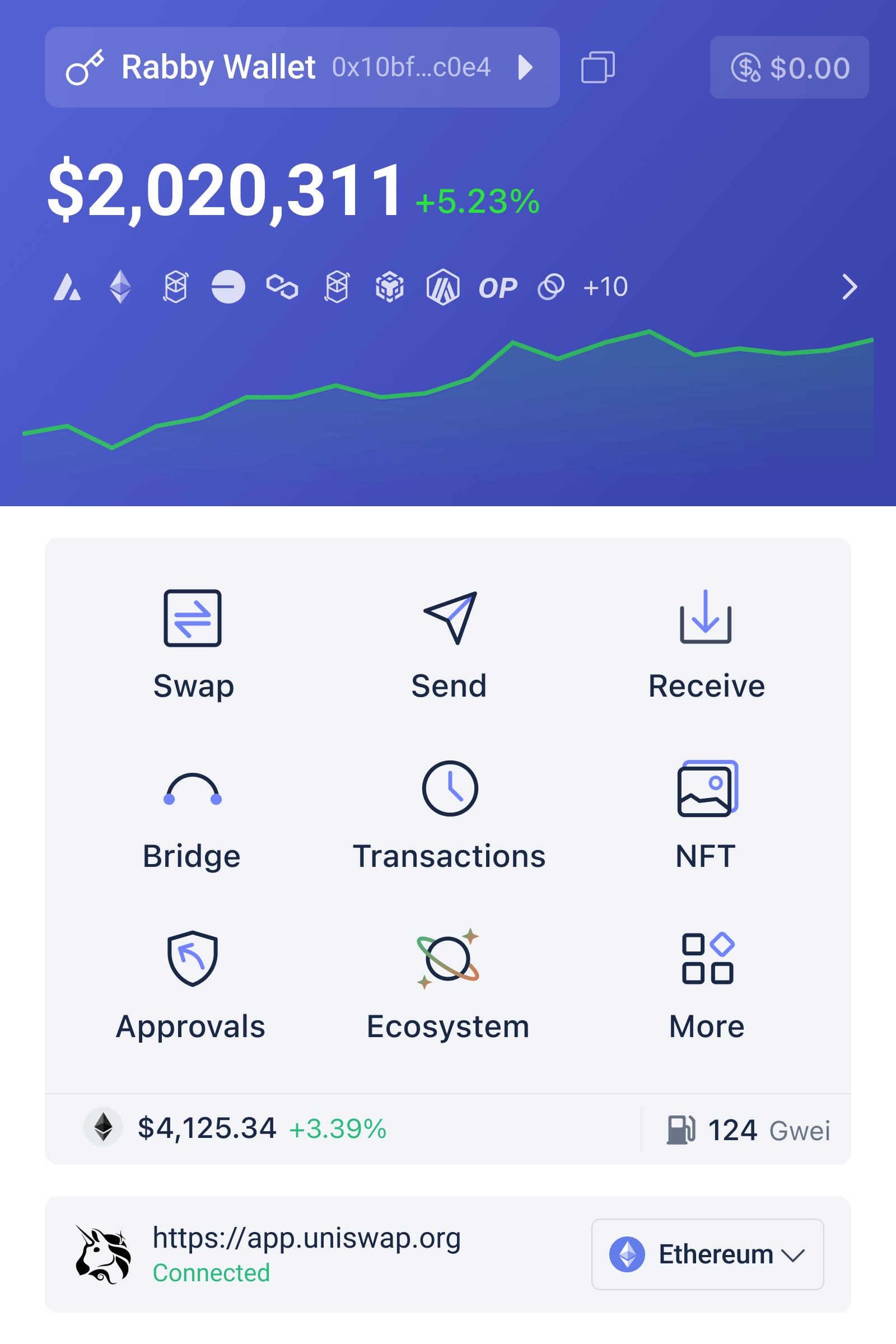
For people preparing to use the browser extension, the safest starting point is to obtain the rabby wallet extension through a trusted, verified source and to avoid links delivered through unsolicited messages or advertisements. Installation security is part of wallet security. A flawless transaction review cannot help if a fake extension has already captured a recovery phrase or redirected the user to a counterfeit interface.
After installation, users should treat the wallet as one component in a layered process. Before connecting, check the domain carefully. Before signing, inspect the network, contract, token movements, approval scope, and fee. If the simulation conflicts with the application’s description, stop and investigate rather than assuming the warning is a technical nuisance. When a transaction is unfamiliar, a small test with limited funds can reduce the cost of a misunderstanding, although it cannot eliminate smart contract or market risk.
Rabby’s approach can be compared with several alternatives. A basic browser wallet often provides a familiar signing prompt and may show some decoded fields, but it may offer less contextual interpretation. Its advantage is simplicity and broad familiarity; its weakness is that users may see a confirmation without a clear before-and-after picture.
A hardware wallet offers a different defense. It keeps key operations in a separate device, which can make remote theft of the signing key more difficult. That is valuable, especially for larger balances. Yet a hardware device does not automatically understand whether a user is approving a dangerous contract interaction. If the user confirms a malicious transaction on the device, key isolation alone may not prevent the loss. Hardware security protects the key; simulation helps evaluate the action. They solve related but different problems.
Manual verification through block explorers, contract source code, and token-approval tools can be more transparent and more powerful for an experienced analyst. It may reveal contract addresses, verified code, prior activity, and allowance details that a wallet summary cannot fully explain. The trade-off is time and complexity. A source-code label is not the same as a security audit, and a verified contract can still contain economically dangerous logic or be controlled by an administrator with broad powers.
Multisignature wallets and separate “hot” and “cold” accounts add organizational and operational controls. A multisignature setup can require several approvals before funds move, which is useful for treasuries or shared assets. It can also slow down routine DeFi activity and introduce coordination risk. A hot wallet is convenient for experimentation, while a colder account can protect long-term holdings. The practical choice depends on how often the account interacts with contracts, how much loss the user can tolerate, and whether convenience is being purchased with an unrecognized increase in exposure.
Where transaction simulation breaks down
The most important limitation is that simulation is not omniscience. It depends on the node, the available state, the transaction parameters, and the ability to reproduce the relevant execution path. Some contracts use external data, changing conditions, unusual token behavior, or mechanisms that are difficult to represent cleanly in a preview. A simulation may fail even when a transaction would succeed, or it may succeed under conditions that change before settlement.
Another boundary is social engineering. A user can be shown an accurate simulation and still be manipulated into approving an action they do not understand. Attackers may create urgency, frame warnings as routine, or distribute a token whose apparent value encourages further interaction. The wallet can surface evidence; it cannot decide what level of risk is acceptable for the user.
There is also a difference between permission risk and execution risk. A transaction may execute exactly as previewed but grant a lasting allowance. Conversely, a carefully limited approval may reduce permission risk while the later deposit still exposes funds to a vulnerable protocol. Reviewing only the immediate token movement misses the possibility that the transaction changes what a contract may do in the future.
For that reason, a useful heuristic is to review every DeFi signature in four passes. First, identify the action in ordinary language. Second, compare the expected assets and permissions with the simulation. Third, ask what authority remains after the transaction completes. Fourth, consider the application and asset independently of the wallet warning. If any pass produces uncertainty, do not let a smooth interface turn uncertainty into consent.
What to watch as wallet security evolves
If transaction simulation becomes more common, the likely benefit is not that users will stop making mistakes. The more realistic improvement is that mistakes become easier to detect before signing, particularly when a website’s description and the contract’s apparent effects diverge. Wallets may increasingly compete on how clearly they explain permissions, contract relationships, and changes to a user’s portfolio rather than on how quickly they produce a confirmation screen.
That future remains conditional. Better warnings can create warning fatigue if they are too frequent, vague, or alarmist. Users may learn to click through every red message, just as people ignore excessive browser alerts. The design challenge is therefore not simply to produce more warnings. It is to make the important warnings specific, explain the mechanism behind them, and distinguish a routine approval from a potentially irreversible transfer.
For DeFi users in the United States, this matters in a practical way. A wallet review should be part of operational discipline, alongside account separation, careful recovery-phrase handling, approval management, and records of what was signed. None of these practices eliminates risk. Together, they improve the odds that a user notices a mismatch before funds leave the account.
FAQ: Rabby Wallet and DeFi transaction simulation
Does transaction simulation guarantee that a DeFi transaction is safe?
No. It provides a forecast of the transaction’s likely effects under particular conditions. It can reveal unexpected transfers, approvals, failures, or state changes, but it cannot prove that the contract is trustworthy, the token has value, or the protocol will remain secure. Treat the result as evidence for a decision, not as a safety certificate.
Should a hardware wallet replace Rabby’s transaction review?
They address different risks. A hardware wallet helps protect signing keys from certain remote attacks, while transaction review helps a user understand what a signature is authorizing. For larger balances, using strong key protection together with careful transaction inspection can be more robust than relying on either measure alone.
What should I do when the simulation does not match the DeFi app’s description?
Stop before signing. Check the network, recipient or contract address, token amounts, approval scope, and whether the request is an approval, transfer, permit, or contract interaction. If the mismatch remains unexplained, use a separate account with limited funds for investigation or avoid the transaction. Confusion is itself a security signal.
The useful question is not whether Rabby can make DeFi risk disappear. It is whether the wallet can give the user a clearer view of the decision before the blockchain makes it difficult to reverse. Transaction simulation is valuable precisely because it turns hidden instructions into inspectable consequences. Its boundary is equally important: understanding what a transaction will do is not the same as knowing whether you should do it.