

A common misconception is that a wallet becomes safe simply because it displays a transaction before signing. In reality, a readable preview is useful only if it explains what the transaction is expected to do and if the user understands what the preview cannot prove. This distinction matters in DeFi, where one click can approve a contract, move assets across a bridge, or interact with several protocols at once.
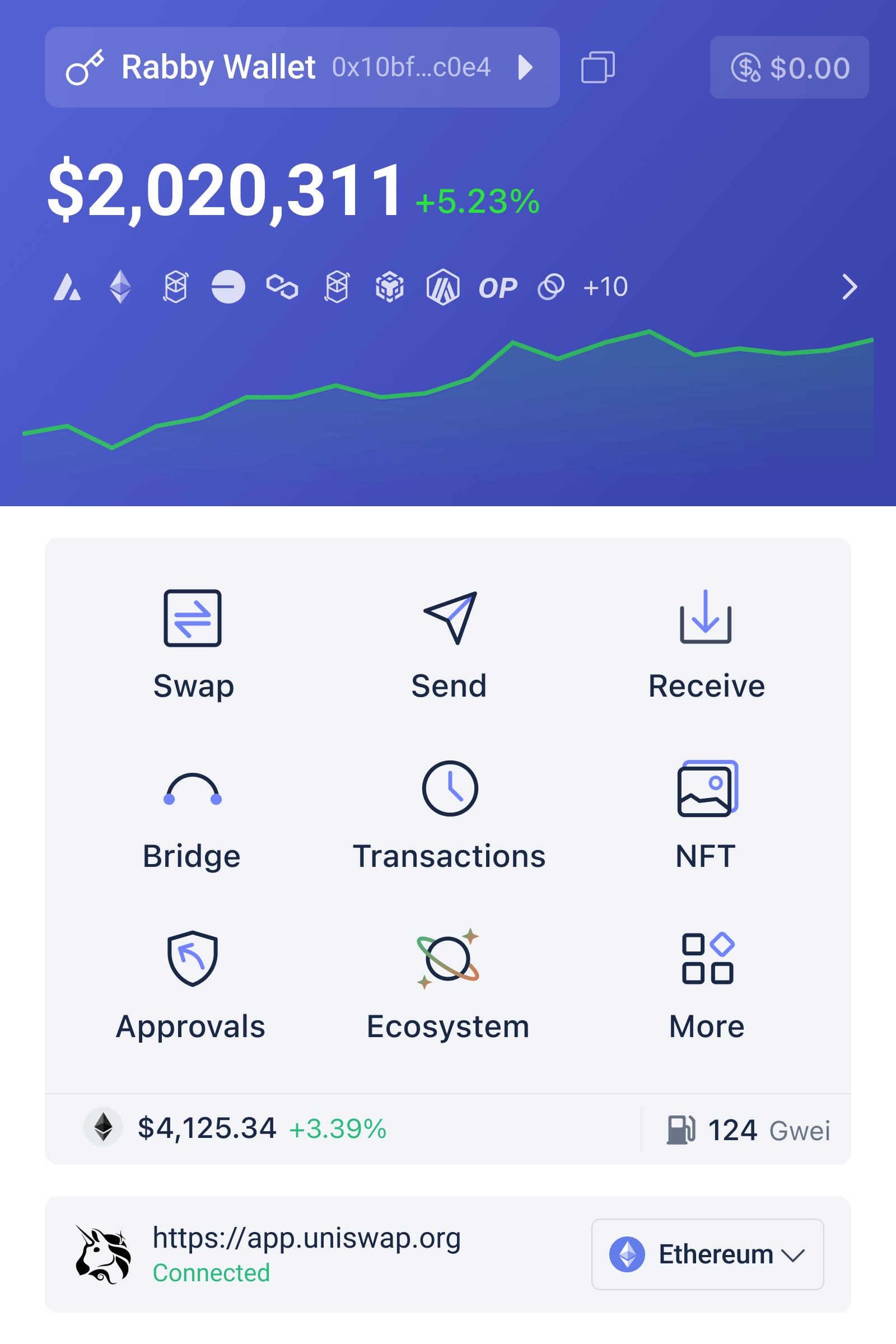
Rabby approaches this problem as a transaction-focused, non-custodial wallet for Ethereum and other EVM-compatible networks. Its central idea is not that the wallet should make decisions for the user, but that it should act as an independent examiner before the signature is produced. For German-speaking users moving between Ethereum, Arbitrum, Base, Polygon, Optimism, Avalanche, BNB Chain and many other EVM networks, that extra examination can be more valuable than another decorative dashboard feature.
How transaction simulation works—and why it is more than a balance preview
A blockchain transaction is normally a request to execute instructions in a smart contract. The wallet may show the destination address, gas estimate and a technical data field, but those details are difficult for most people to interpret. Transaction simulation adds another layer: before signing, the wallet runs an estimation of the proposed action and presents the expected changes to token balances.
Consider a token swap. A basic wallet may ask the user to approve the token and then sign a swap, leaving the user to infer the result from a dense contract call. A simulation-oriented interface attempts to show the practical outcome: which asset should decrease, which asset should increase, and whether the action appears to include an approval or another permission. This is a conceptual shift from “Where is the transaction going?” to “What is the transaction trying to change?”
That shift is especially important for approvals. An approval does not usually transfer tokens immediately; it grants a contract permission to spend them later, sometimes up to an unlimited amount. Rabby’s security engine checks for warning signs including phishing indicators, known hacks and potentially unlimited token approvals. The simulation and the warning system therefore address related but different questions: the simulation describes the expected state change, while the scanner looks for patterns associated with danger.
Neither function is a guarantee. A simulation depends on the state of the relevant blockchain and on the assumptions of the simulation environment. Market prices can move, liquidity can change, a contract can behave differently under a later condition, or a malicious application can present a misleading context around an otherwise plausible call. The sensible interpretation is not “the transaction is safe,” but “this is what the wallet currently expects to happen, and these are the warnings it can identify.”
Rabby versus a conventional single-chain workflow
The older wallet experience was shaped by a simpler environment: connect to a dApp, select a network manually, approve a request and sign. That workflow can still function, but it places much of the cognitive burden on the user. When assets are distributed across several networks, the risk is not only a malicious contract. It is also signing on the wrong chain, confusing an approval with a transfer, or overlooking a bridge route that introduces additional protocol exposure.
Rabby is designed around this multi-chain reality. It supports more than 140 EVM-compatible blockchains and can detect the network requested by a connected dApp, switching automatically in supported situations. That removes a source of routine friction, but convenience has a boundary: automatic network switching should not replace checking the chain, contract and asset yourself. A fast wrong decision is still wrong.
Its integrated bridge functionality, including access to bridge protocols such as LI.FI, and its swap aggregator create a more unified interface for moving assets. The practical benefit is that a user may not need to leave the wallet to compare routes or locate liquidity. The trade-off is concentration of complexity. A swap or bridge can involve several contracts, fees, slippage assumptions and counterparty risks, even when the interface looks like one simple action. A polished summary improves visibility, but it does not remove the underlying dependencies.
For users comparing Rabby with MetaMask, the most useful distinction is not that one wallet is universally safer. Both are tools whose security depends heavily on the user, the connected device, the dApp and the contracts involved. Rabby’s emphasis is more explicitly oriented toward multi-chain DeFi review and warnings, while MetaMask remains a familiar general-purpose gateway for many users. The better fit depends on whether the reader values a more proactive transaction analysis layer or prefers an established, broadly integrated workflow.
Those who want to test the interface can use the rabby wallet extension for supported browsers such as Chrome, Brave and Edge. Rabby is also available through desktop and mobile versions, but the security principle remains the same across platforms: the private keys are held locally under the non-custodial model, not handed to Rabby’s servers. This reduces custodial risk, but it transfers responsibility for backups, device security and phishing resistance to the user.
Security architecture: useful separation, not magical protection
One subtle strength of the design is the separation between transaction creation and transaction inspection. Rabby does not independently alter or create the user’s transactions; it reviews the proposed action before the user signs. Core signing functions are intended to remain usable even if Rabby’s backend services are unavailable. This matters because a wallet interface may provide security information, but it should not become the only entity capable of accessing or signing the user’s assets.
The open-source architecture, released under the MIT licence, creates an opportunity for community review of the software. That is a meaningful transparency property, although open source should not be confused with proof of safety. Code can be difficult to audit, dependencies can change, releases can differ from source expectations, and users can still install counterfeit extensions. In practice, downloading software only from a trusted source, checking permissions and using a hardware wallet remain important precautions.
Hardware-wallet compatibility with Ledger, Trezor and OneKey adds another layer by keeping key operations within a separate signing device. It does not make the transaction itself harmless. A hardware wallet can protect the private key while still allowing a user to approve a harmful contract interaction. The strongest model is therefore layered: verify the application and network, read the simulated outcome, question unusual approvals, and use hardware confirmation for meaningful funds.
Convenience features and their hidden trade-offs
Rabby also illustrates how modern wallets are evolving from passive key stores into transaction workbenches. Gas Account can allow fees to be paid with stablecoins such as USDC across networks, reducing the familiar problem of holding a small amount of every native gas token. That is practical for users operating across many chains. Yet fee abstraction can make the cost mechanism less visible, so users should still inspect the effective fee, exchange rate and route rather than assuming that paying in a stablecoin means paying less.
Similarly, Rabby Points may reward actions such as swaps, gas funding or referrals. Loyalty systems can encourage exploration, but they should not become a reason to increase trading frequency or take unnecessary bridge risk. A useful rule is to treat rewards as a secondary feature: first decide whether the transaction makes economic and security sense, then consider any points attached to it.
The deeper lesson is that wallet safety is partly a problem of information design. Users do not need every byte of calldata, but they do need the right abstractions: expected assets leaving and arriving, permissions granted, network selected, recipient identity and meaningful warnings. Transaction simulation improves this information layer. It cannot resolve uncertain contract logic, guarantee future behaviour or compensate for a compromised browser and careless key management.
What to watch as multi-chain wallets mature
Recent project messaging presents Rabby as a broad EVM wallet for Chrome and Brave users, with an emphasis on simple, fast and secure on-chain access. The important development signal is not the slogan itself, but the direction it reflects: wallets are competing increasingly on interpretation. As users interact with more chains, bridges and bundled transactions, the interface that explains consequences may matter as much as the interface that submits them.
If this trend continues, the most useful comparison will be between different approaches to verification. One approach is familiar and lightweight: show raw request details and let the user decide. Another is simulation-led: model the expected result and highlight suspicious permissions. A third could combine simulation with stronger independent transaction policies, such as refusing certain approvals or requiring separate confirmation for high-risk actions. The open question is how much automation users should accept before a safety aid becomes an opaque decision-maker.
For now, a reusable checklist is more reliable than any brand promise. Before signing, ask: Is this the expected network? Which assets leave my wallet? Which assets arrive? Am I granting a spending permission? Is the recipient or contract one I deliberately selected? Does the fee make sense? If the simulation fails, looks incomplete or conflicts with the dApp’s description, stop rather than treating the warning as a technical inconvenience.
Frequently asked questions
Does transaction simulation guarantee that a DeFi transaction is safe?
No. It provides an estimate of the expected result and can expose suspicious balance changes or approvals, but it cannot prove that a contract has no hidden risk or that conditions will remain unchanged. Use it as a verification layer, not as an insurance policy.
Is Rabby a custodial wallet?
No. Rabby is described as non-custodial, with private keys stored locally on the user’s device rather than sent to Rabby’s servers. That means the user retains control, but also bears responsibility for recovery phrases, device protection, software authenticity and signing decisions.
Who benefits most from a multi-chain wallet with simulation?
It is particularly useful for users who regularly move between EVM networks, interact with several DeFi protocols or manage approvals and bridges. Someone making occasional, simple transactions may value a lighter interface, while active multi-chain users benefit more from network automation and transaction-level interpretation.
The right way to judge Rabby, or any competing wallet, is not by asking whether it eliminates DeFi risk. It cannot. The more realistic question is whether it helps the user notice the important difference between a harmless-looking prompt and the actual permission or asset movement hidden behind it. In that narrower, more useful sense, transaction simulation is not a promise of safety; it is a tool for making informed refusal possible.